
CYCLONE IDAI NEEDS ASSESSMENT REPORT
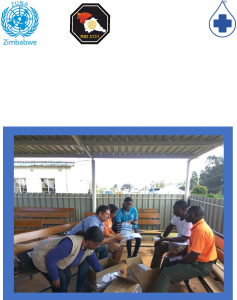
This assessment would not have been possible without the cooperation and constant support of district officials from Government of Zimbabwe. While the Team is indebted to all of them, exigencies of space and time constraints limit us from naming each one.
Firstly, I would like to acknowledge the initiative taken by Dr. Nehaal Mayur, Ms. Rtn. Jasmine Shaikh and Mr. Rtn. Satish Khade Rotary RD3131, Pune and Mr. Saurab Navande for providing valuable inputs and financial support. The path shown by you all have successfully led and will lead to make the difference in the lives of the people affected by Cyclone Idai in Chimanimani, Zimbabwe.
The Team would like to acknowledge, with deep gratitude, the guidance, cooperation and support extended by the entire ZUNA team Mr. Fischer Chiyanike, Ms. Bianca Takudzwa, Ms. Clara Machingauta, Ms. Siphathisiwe Siziba who have pledged their most valuable time for this mission.
The Team also gratefully acknowledges the support from Dr. Radhasharan Goswami, Hind Pharma, Mr. Rahul Pathak, Aqua Plus, Mr. Praveenkumar Pawar, DevRes Consultants LLP.
Our special to Mr. Munetsi Chiwanza for providing logistical support and being with us all time throughout the mission.
Our special thanks to the District Administrator, Chimanimani Mr. Siyafanana, Health Officer, Chimanimani, Mr. Mukwakwasha, DEHO, Chimanimani and Rev Femayi, Civil Protection Unit, Chimanimani for their kind support and guidance.
And, above all, the communities of Chimanimani, who, keeping aside their own problems, gave us a patient hearing and endeavoured to answer all the questions put to them, without any reservations.
This Report is dedicated to all the families of Chimanimani, who lost their lives and their families were strong through their sorrows, offered us warm hospitality and taught us to believe that there is always a new path.
– DevRes Consultant LLP Needs Assessment Team
OVERVIEW
Tropical Cyclone Idai made landfall in Zimbabwe, on the 15 of March 2019 affecting Chimanimani, Chipinge, Mutare and Buhera districts. 59,125 IDPs (12,249 households) were reported across the 4 affected districts. The largest number of IDPs have been identified in Chipinge (36,347 IDPs), followed by Chimanimani (14,016 IDPs), Buhera (4,469 IDPs) and Mutare (4,293 IDPs). The high number of IDPs in Chipinge can be explained by the fact that the district has the highest population. However, Chimanimani is the district that is worst affected by the cyclone.[1]
Cyclone Idai timeline
|
March 3 |
The tropical disturbance that would become Cyclone Idai develops and begins to strengthen near the coast of Africa. |
|
March 5 |
Heavy rains cause severe flooding across Mozambique, Zimbabwe and Malawi. |
|
March 11 |
Now a tropical depression, the storm builds in intensity between coastal Africa and Madagascar. |
|
March 14 to 15 |
Tropical Cyclone Idai makes landfall near Beira, Mozambique, a coastal city of half a million people. The fierce storm pummelled Mozambique, Malawi, and Zimbabwe with strong winds and rains. As a Category 2 storm with sustained winds exceeding 105 mph. |
|
March 20 |
Heavy rains continue along with search and rescue operations and damage assessments. |
|
March 21 to 27 |
Governments and humanitarian aid agencies begin responding with life-saving relief supplies to the affected areas. |
|
March 28 |
The Mozambique government calls off the search for survivors of Cyclone Idai. |
|
April 19 |
Intervention by ZUNA team |
The President has declared the impact of Cyclone Idai in Zimbabwe a state of disaster. As of 10 April, at least 299 deaths and 186 injuries have been reported. The homes of at least 4,000 households are destroyed or currently uninhabitable. This is expected to increase as assessments continue.In the seven districts affected by the Cyclone Ida- Chipinge, Chimanimani, Buhera, Bikita, Mutare, Gutu, and Chiredzi – multisectoral support will be required to speed recovery. The livelihoods of over 270,000 people across these districts has been affected. Those in Chipinge and Chimanimani districts are worst hit.[2]
Pathway of Idai Cyclone[3]
ABOUT CHIMANIMANI
|
Sr. No |
Particulars |
Figures |
|
1 |
Total Number of Wards |
23 Wards |
|
2 |
Number of Wards Affected |
23 Wards |
|
3 |
Number of Wards Seriously Affected |
7 & 8 |
|
4 |
Total number of population affected |
14016 |
|
5 |
Number of Displaced Population |
4073[4] |
|
6 |
Total number of deaths |
169 |
|
7 |
Total number of people missing |
327 |
|
8 |
Total number of people injured |
164 |
|
9 |
Total number of houses damaged |
2251 |
Houses damaged in New Stands Village in Chaimanimai District
RECOMMENDATIONS
Short term
With incessant rains and heavy winds of cyclone Idai that had severely damaged inhabitants and essential services. There were series of landslides with in the habitats that left around 250 people dead reports of people still missing. As on date 4073 people remain displaced in Chimanimani. Looking at the damages to the dwellings it is estimated that the people will remain in the camps for the next 4 – 6 months.
The urgent need for WASH is as follows –
- Ensuring provision of safe drinking water at household level through household level treatment and/ or disinfection.
- Provide water treatment kit wherever water sources are available, majorly springs.
- Ensure to provide manually easy to operate treatment systems to avoid electricity hassles and fuel shortages.
- With the onset of more rainfalls, there is a likelihood of water being contaminated and high turbid. Mere chlorination will not be sufficient for safe drinking water. Hence, filtration followed with chlorination will be required.
- There are 26 clinics, 26 schools and three camps in Chimanimani where the internally displace people are taking shelter in which treated water supply is absent. All these locations urgently require community-based water filtration system to mitigate immediate outbreak of cholera, diarrhea and other water borne diseases.
- As the access to most of the affected areas are now open, it is identified that affected people are drinking untreated water from the springs as their existing water supply systems are damaged. Therefore, focus on point of use chlorine tablets is advised.
- As per the discussion with District Health Officer, Chimanimani, Ministry of Health and Child Care, Government of Zimbabwe, an estimated 3.2 lakhs chlorine tablets are required along with 130 cholera kits which 5 kits per clinic is urgently required.
- Though are trained manpower available for water quality monitoring, they lack the hardware for testing. There are 23 wards in Chimanimani and hence one water testing kit to analyze turbidity, residue chlorine and PH per ward is recommended.
- Provide immediate safe excreta disposal facilities especially for women with handwashing facilities.
- Construct appropriate bathing and washing places in the camps.
- Ensure stock and use of ORS in cases of diarrhea.
- Special community awareness program on diarrheal diseases/ vector borne diseases – malaria need to be carried out for all communities (host, locally affected villages).
- Provide WASH nonfood items (hygiene kit, cloths, buckets, water disinfectant tablets) as support to help families to get back to normal ways of living and practice hygienic ways of handling drinking water and personal hygiene.
- In all the camps and schools visited by ZUNA team, after interaction with IDPs it was found that people lack essential hygiene materials like sanitary pads/ napkins, nail cutters, basic hygiene items like tooth brush, soaps, etc.
Mid term
The situation currently posses a potential risk of water borne diseases, particularly diarrhea. A need for hygiene education to promote safe handling and storage of treated water and safe excreta disposal has been observed in the affected areas. The response should focus on –
- Targeting women ands children (through information education and communication (IEC) on water purification methodology and promotion of safe handling of treated water.
- Ensure continued stock of water disinfectants at household level.
- Water quality surveillance from source level to point of use.
- Ensure capacity building on water treatment and quality in emergencies and hygiene promotion for all frontline health and WASH Government staff.
As 4073 individuals are displaced as their dwellings have been permanently damaged. It is assumed that these people will be staying in government and partner organized temporary shelters for another 4 to 6 months.
ZUNA Assessment team interacting with affected people
FINDINGS
The ZUNA team reached Chimanimani on 19th April 2019 and met the District Administration Officials. The District Administration deputed on officer to lead the ZUNA team in the affected areas. The following camps were visited –
|
Sr. No |
Camp Site |
|
1 |
Ngangu Primary School, Ngangu Village, Chimanimani |
|
2 |
Ngangu Secondary School, Ngangu Village, Chimanimani |
|
3 |
New Stands Village, Chimanimani |
- Ngangu Primary School:
76 houses were destroyed. Though many of the affected victims are staying with the host families, yet this camp accommodated 150 individuals. The IDPs have received relief items such food and nonfood items from various other partner agencies and also from Government. The district administration has also installed water tanks which is connected to the spring water source. However primary treatment is not done. Water is being fetched by the IDPs from theses tanks and point of use treatment is carried out. The same is practiced in all the camps and villages. It is also observed that children are directly consuming water from the tap stands. Government and international agencies have also provided temporary trench latrine in this camp. It is observed that more support on NFI kits such as (Hygiene kit – nail cutter, sanitary napkins/ cloth/ pad, personal hygiene items such as tooth paste, brush, buckets, soap, etc) is required. The school is expected to open on the first week of May 2019 and IDPs would be asked to evacuate the school premises and it is very likely these IDPs will be shifted to the existing government supported camps for next 4 – 6 months.
- Ngangu Secondary School:
127 homeless people are staying in this camp. The IDPs have received relief items such food and nonfood items from various other partner agencies and also from Government. The district administration has also installed water tanks which is connected to the spring water source. However primary treatment is not done. Water is being fetched by the IDPs from theses tanks and point of use treatment is carried out. The same is practiced in all the camps and villages. It is also observed that children are directly consuming water from the tap stands. Government and international agencies have also provided temporary trench latrine in this camp. It is observed that more support on NFI kits such as (Hygiene kit – nail cutter, sanitary napkins/ cloth/ pad, personal hygiene items such as tooth paste, brush, buckets, soap, etc) is required. The school is expected to open on the first week of May 2019 and IDPs would be asked to evacuate the school premises and it is very likely these IDPs will be shifted to the existing government supported camps for next 4 – 6 months.
- New Stands Village:
In this village 76 people were killed due to Idai cyclone. Of the 781 houses in the village around 200 houses are damaged. This village is one of the worst affected village in Chimanimani district. The IDPs have received relief items such food and nonfood items from various other partner agencies and also from Government. The district administration has also installed water tanks which is connected to the spring water source. However primary treatment is not done. Water is being fetched by the IDPs from theses tanks and point of use treatment is carried out. The same is practiced in all the camps and villages. It is also observed that children are directly consuming water from the tap stands. Government and international agencies have also provided temporary trench latrine in this camp. It is observed that more support on NFI kits such as (Hygiene kit – nail cutter, sanitary napkins/ cloth/ pad, personal hygiene items such as tooth paste, brush, buckets, soap, etc) is required.
- Rural District Clinic:
The team visited Rural District Clinic in Chimanimani. The clinic accommodates around 500 outpatients every day. Currently the clinic is also using spring water source. However primary treatment is not done. Water is being fetched by the patients from theses tanks and point of use treatment is carried out. All types of patients visit the clinic.
- Other Interventions
It is observed by the assessment team that interventions such as temporary latrines, temporary water storage tanks and tap stands, food, nonfood items, point of used chlorination tablets have been provided by partner agencies and Government. However, from the observation and with the discussion with the ministry of health and child care further interventions for effective WASH response has to be addressed immediately and list of which is shared by the ministry to the ZUNA team.
INTERVENTION BY ZUNA TEAM IN ASSOCIATION WITH ROTARY RD3131, AQUA PLUS & HIND PHARMA
On the appeal raised by Zimbabwe United Nation Association to immediately respond to Idai Cyclone, Aqua Plus Disaster Management and Hind Pharma through their CSR funds pledged 4 number of AP 700 CL Water Treatment Kits, 55000 Chlorine Tablets and 10 Cholera Kits. The same where air lifted from India to Harare, Zimbabwe. The ZUNA team cleared the goods at speed and the same were transported in a dedicated vehicle to Chimanimani which is the worst affected district in Zimbabwe. Upon reaching Chimanimani, the team proactively coordinated with the district administration who then further directed to coordinate with RDC, Chimanimani. The 55000 chlorine tables and 10 Cholera kits were handed over to the Health officer who were in grave needs of these items. The team were further guided by the Government WASH focal person of Chimanimani district to the sites for assessment and installation of the water filtration kit. Upon discussion with the community and agreement of safety and security of the equipment by the management committee; the following sites were selected for installation –
|
Sr. No |
Camp Site |
No. of people living in the camps |
|
1 |
Ngangu Primary School |
Around 300 families (150 individuals living in the camp and people living in nearby locations) |
|
2 |
Ngangu Secondary School |
Around 200 families (127 individuals living in the camp and people living in nearby locations) |
|
3 |
New Stands Village |
300 families; 70 people are killed in this single village |
|
4 |
Rural District Clinic |
Around 500 outpatients visiting every day + 10 inpatients. |
Water filtration kit installed in Ngangu Primary School
Affected people taking water from the newly installed water filtration kit
Children drinking water from the filtration plant in New stands village
Briefing the officials on Water Quality Monitoring
ZUNA team handing over the chlorine tablets, cholera kit and filtration kit to DHO
Water filtration plant installation by ZUNA team
CONCLUSION
Looking at the scenario, there is potential risk of water borne diseases. There are 23 wards in Chimanimani district with no water treatment and water quality surveillance making the community susceptible to disease outbreak. With the onset of monsoon and the upcoming of winter there are chances of the situation deteriorating further. Our further interventions will ensure mitigation of the WASH risks.
[1] https://reliefweb.int/report/zimbabwe/zimbabwe–tropical–cyclone–idai–baseline–assessment–round–1–chimanimani–chipinge
[2] UN OCHA report
[3] https://www.usaid.gov/sites/default/files/documents/1866/03.22.19–USAID–DCHA–Mozambique–Tropical–Cyclone–Idai–Map.pdf
[4] Current status as shared by ministry of health and child care